
The Firebox and Damper: What Every North Texas Homeowner Should Know
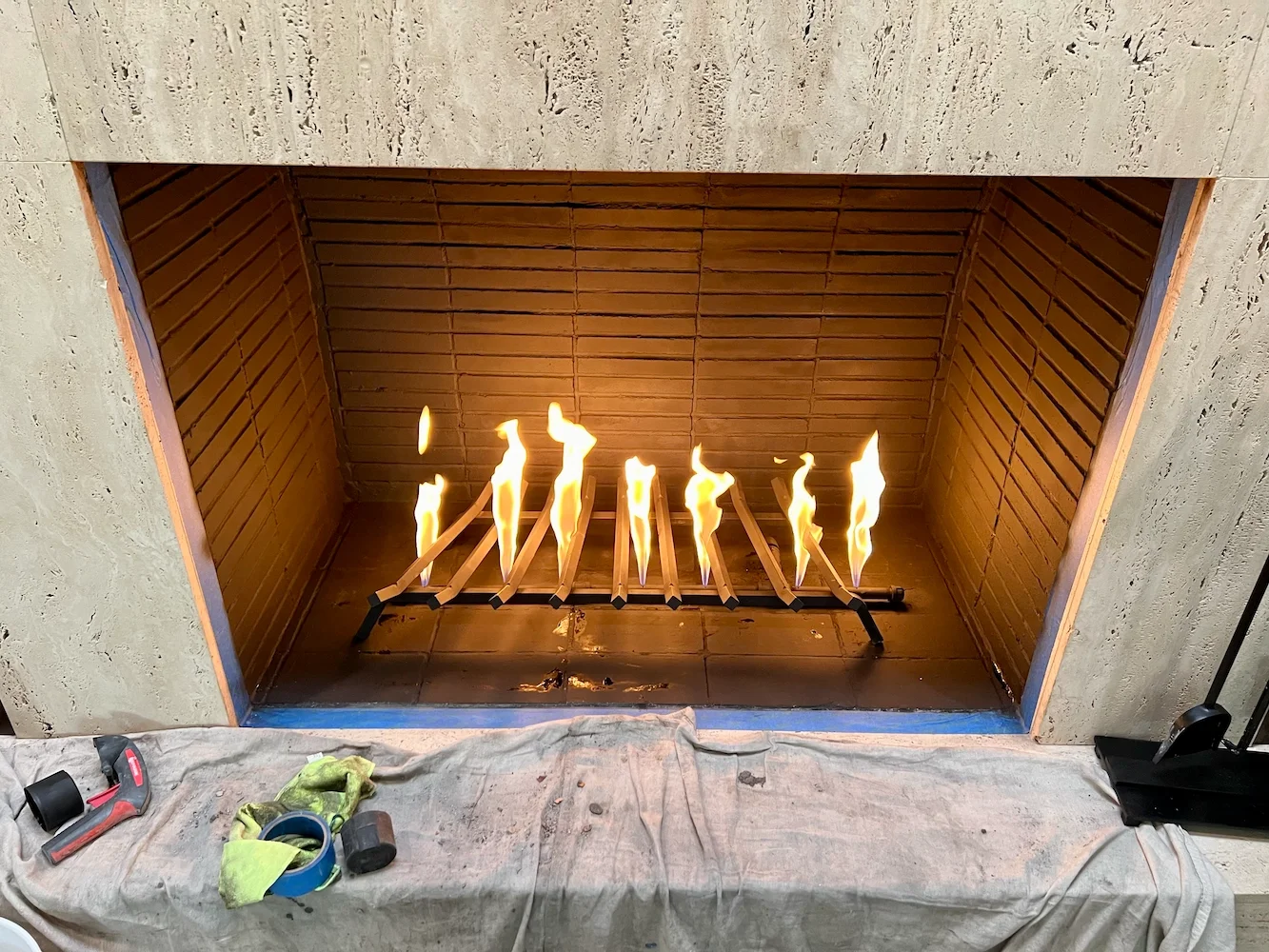
Most homeowners think of the fireplace as one thing. But every fire you’ve ever built actually depended on two components working together: the firebox — the chamber that holds the flame — and the damper — the valve that controls how air moves through the whole system. When both are in good shape, your fireplace runs the way it should. When one isn’t, you start noticing it in all the wrong ways. Here’s what you need to know about both.
What Is the Firebox?
The firebox is the interior combustion chamber — the brick- or refractory-lined box where your logs burn. It’s designed to contain high heat, direct exhaust gases upward into the smoke chamber, and reflect warmth back into your living space.
What most people don’t realize is that the firebox isn’t just a hole in the wall. It’s engineered. The angled rear wall (called the fireback) is intentionally sloped to push hot gases up and out while radiating heat forward into the room. The floor, called the hearth extension, is built to handle embers and direct heat toward you instead of losing it up the flue.
Because it takes the full brunt of every fire, the firebox is the most heat-stressed part of your entire chimney system. Over years of use, the mortar joints between the bricks — called refractory mortar — gradually break down. When they do, heat and combustion gases can begin working their way behind the brick. That’s when things get serious.
What Is the Damper?
The damper is a movable plate or door located just above the firebox, at the base of the flue. It’s your fireplace’s on/off switch for airflow.
Open damper: Air flows freely up the chimney. Smoke exits the house. Your fire breathes and burns efficiently.
Closed damper: The flue is sealed. Outside air — and everything that comes with it — stays out.
That second function is easy to underestimate. A properly closed damper is what keeps cold winter air, summer heat, and outside humidity from free-flowing through your chimney straight into your living room. It’s also what keeps birds, insects, and the occasional squirrel from exploring past the flue.
There are two common damper types in North Texas homes. The throat damper sits just above the firebox and is the traditional style found in most masonry chimneys. The top-mount damper mounts at the very top of the flue and functions like a cap and damper in one — it’s more energy-efficient and is often the go-to when a throat damper needs replacement.
What Goes Wrong With the Firebox
The firebox deals with intense, repeated heat cycles — fire on, fire off, season after season. Over time, a few things tend to give way.
Spalling and cracked brick. Thermal expansion and contraction gradually loosen the face of the brick. You’ll see chunks or flakes on the firebox floor, or notice pitting and surface cracks on the brick itself.
Deteriorating mortar joints. The refractory mortar between firebox bricks isn’t the same as regular mortar — it’s rated for high heat. When it wears down, you’ll often see gaps, crumbling, or soft spots between the bricks. Left alone, this allows heat transfer into areas of the wall that aren’t designed to handle it.
White staining (efflorescence). Chalky white deposits on firebox brick are a sign of moisture working its way through the masonry. It usually points to a chimney cap or crown issue allowing water in from above — but the damage shows up at the firebox level.
Broken firebox panels. Homes with factory-built (prefab) fireplaces have firebox panels made of refractory cement rather than brick. These panels crack with age and need to be replaced before the fireplace is used.
What Goes Wrong With the Damper
Dampers are simple in concept, but they take a beating from heat, moisture, and years of use.
Rust and corrosion. The most common damper issue in North Texas. Humidity works into the flue, and cast iron or steel damper plates begin to corrode. A rusty damper won’t seal properly — even when “closed,” it lets conditioned air escape and outside air in year-round.
Warping from heat. Repeated high-heat fires can warp the metal plate over time, preventing it from opening or closing fully.
Stuck or seized damper. Creosote buildup, rust, or debris can freeze the damper in place — either stuck open or stuck shut. A damper that won’t open means smoke in your house. A damper that won’t close means your HVAC system is fighting a wide-open hole to the outside.
Broken or missing handle. The control rod or handle that operates the damper can corrode, break off, or become disconnected from the plate — leaving you with no way to reliably control the position.
On energy costs: A damper that doesn’t seal tightly is essentially a hole in your ceiling. If you’ve noticed your heating or cooling bills creeping up, it’s worth having your damper inspected. A tight-sealing top-mount damper can make a meaningful difference — and it’s something our friends at Efficient Home Solutions AC & Heating (Plano, TX) see show up in home efficiency assessments regularly.
What Routine Maintenance Looks Like
Firebox and damper maintenance isn’t complicated — it’s mostly about staying ahead of small issues before they become structural ones.
Annual chimney inspection. A Level 1 inspection covers the accessible parts of the firebox and flue, including the damper. The technician checks mortar joints, looks for spalling or cracks in the firebox brick, assesses damper operation and seal, and notes anything that warrants a closer look.
Chimney sweep. If you’re burning wood regularly, an annual sweep removes creosote buildup that accumulates in the flue and smoke chamber — and that same buildup is often what degrades damper function over time.
Repointing. When mortar joints in the firebox show signs of wear, a technician can repoint them — removing the deteriorated mortar and packing in fresh refractory mortar. It’s far less expensive than a full firebox rebuild, and it stops the deterioration where it starts.
Damper replacement. When a throat damper is beyond repair, the most practical upgrade is a top-mount damper. It seals better than most original dampers, doubles as a cap to keep out animals and debris, and adds a meaningful layer of energy efficiency.
Serving North Texas Homeowners From McKinney to Dallas
Sweeps N Ladders serves homeowners across North Texas — McKinney, Celina, Prosper, Frisco, Plano, Allen, Dallas, and the surrounding DFW communities. Every fireplace in this region faces the same challenge: a climate that swings hard between humid summers and cold winters, and that combination is exactly what accelerates damper corrosion and firebox mortar wear faster than in drier climates.
Whether your home has a traditional masonry fireplace or a factory-built system, the firebox and damper deserve the same attention you’d give any other part of your home. A fireplace that hasn’t been inspected in a few years — even one that looks fine from the living room — can have significant wear at the mortar joints or a damper that’s sealing at maybe 60% of what it should.
The good news is that most firebox and damper issues are completely manageable when they’re caught early. An inspection takes less than an hour. A repointing job or damper replacement typically wraps in a single visit. What makes these problems expensive is ignoring them long enough that the repair becomes a rebuild.
Sweeps N Ladders owner Paul Herman has over 700 five-star Google reviews from North Texas homeowners — not because the work is complicated, but because he shows up on time, explains what he finds, and doesn’t sell you something you don’t need.
For a deeper look at how your firebox and damper fit into the bigger picture of your chimney system, read our guide: Your Chimney Connects to Everything in Your Home.
Frequently Asked Questions
How do I know if my damper is open or closed? Most throat dampers have a handle or lever inside the firebox — you push or pull it to open and close the plate. If you’re unsure, hold a lighter or small piece of paper near the damper opening. If the flame or smoke pulls upward, the damper is open and drawing air. You can also shine a flashlight up into the flue and look for the plate.
What happens if I burn a fire with the damper closed? Smoke will fill the room very quickly. It’s one of the most common calls we get — a homeowner forgot to open the damper before lighting the fire. If it happens, get the fire out or down as fast as possible, open windows, and open the damper before trying again. Beyond the smoke, burning with a closed damper can overheat the firebox area and drive combustion gases into the house.
How long does a firebox last? A well-maintained masonry firebox can last the life of the home. The limiting factor is usually the refractory mortar joints, which need periodic repointing — typically every 15–25 years depending on use. Prefab firebox panels generally need replacement every 10–15 years with regular use.
Can I replace just the damper without doing other chimney work? Yes, in most cases. Damper replacement is a standalone job. A top-mount damper can be installed without disturbing the rest of the chimney system. If the firebox itself has structural issues, those get addressed separately.
My damper is stuck open. How urgent is that? It depends on the season. A stuck-open damper won’t cause a safety emergency the way a chimney fire would, but it’s a real energy drain and lets in moisture, pests, and outside air. Get it looked at before you’re running heat or AC — that’s when it costs you the most.
Should I worry about carbon monoxide with a damaged firebox? Any breach in the firebox or flue that allows combustion gases to escape into living areas is a serious concern. Cracks in firebox brick or mortar, combined with a restricted or blocked flue, can create conditions where carbon monoxide enters the home. If you have a fireplace you haven’t inspected in several years, an annual inspection is the simplest way to rule it out.
Ready to Get Your Fireplace Inspected?
If it’s been more than a year since your fireplace was inspected — or if you’re noticing crumbling brick, a stubborn damper, or smoke that doesn’t draw cleanly — give us a call. We serve McKinney, Frisco, Celina, Prosper, Plano, Allen, Dallas, and surrounding North Texas communities.
Chimney Cleaning & Sweep: $229
Safety Inspection Only: $129
No call centers. No runaround. Just Paul, with over 700 five-star reviews from your neighbors across North Texas.
(469) 777-8432
Sweeps N Ladders — Chimney & Fireplace Services — North Texas