
Storm Damage to Your Siding in North Texas: Repair, Replace, or File a Claim?
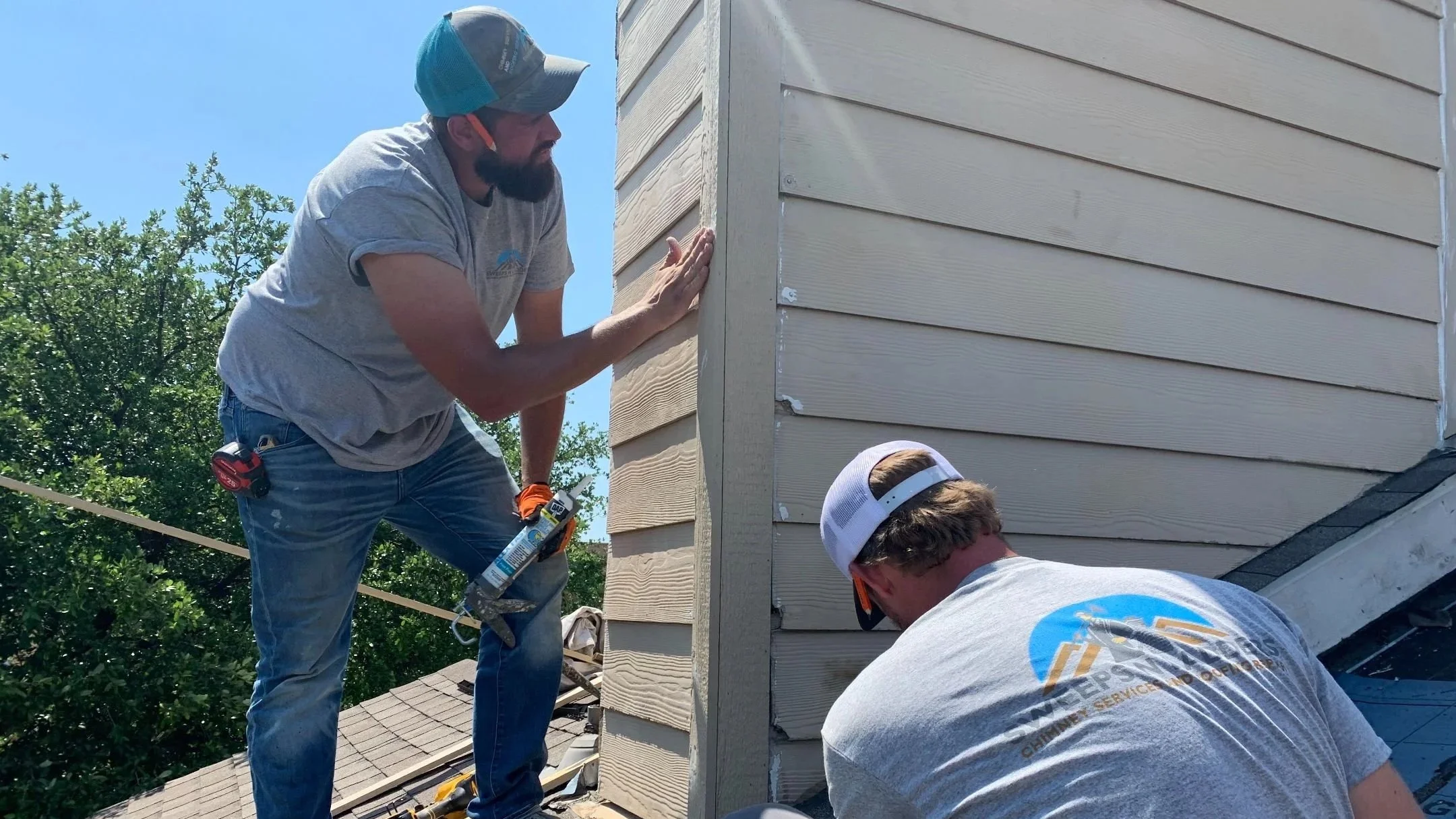
Sweeps N Ladders crew installing new siding on a chimney chase.
If you've lived through a North Texas spring, you already know what a real hailstorm sounds like. One bad ten-minute cell can move through Celina, Prosper, or McKinney and leave roofs, gutters, and siding quietly damaged long after the sky clears. Most homeowners check the roof and the cars. Far fewer think to look closely at their siding — and that's exactly where trouble likes to hide.
After more than ten years working on homes across North Texas, here's the pattern we see again and again: the storm passes, everything looks more or less fine from the driveway, and the homeowner moves on. Then months later there's a soft spot under a window, a musty smell in a closet, or a panel that's started to pull away from the wall. By then a problem that could have been a simple repair has worked its way behind the siding and into the sheathing.
What hail and wind actually do to siding
Different materials fail in different ways, and knowing what to look for helps. Hail cracks vinyl, especially once it's been baked by a few Texas summers and lost some of its flexibility. On fiber cement it leaves dents, chips, and hairline fractures that aren't always obvious until you're standing a few feet away. On wood it splinters and opens up the grain to moisture. Wind does its own kind of damage — it lifts and loosens panels, and it peels trim away from the fascia boards, breaking the seal that's supposed to keep water out.
The damage that worries us most is the damage you can't see from the ground. A cracked panel or a lifted piece of trim doesn't look like much, but it's an open door. Water gets behind the siding, soaks into the sheathing, and just sits there. In our humidity, that's all it takes for mold and rot to take hold — sometimes within a few weeks. The siding still looks intact from the street while the wall behind it is slowly coming apart.
Repair or replace? How we actually decide
This is the question we get most after a storm, and the honest answer is that it depends on three things: how widespread the damage is, how old the siding already was, and whether we can match it.
If the damage is isolated — a few panels on one elevation, caught early — a repair is usually the right call, and we'll tell you so. Where it gets more involved is when the siding is older or the damage is spread across several sides of the house. Older vinyl and discontinued profiles can be nearly impossible to match, and a patch that doesn't blend in is its own kind of eyesore on a home you've invested in. When water has already gotten behind the panels, the conversation changes again, because now we're talking about what's underneath, not just the surface.
We'd rather walk your home and give you the straight version than sell you more than you need. Sometimes that means a simple siding repair or replacement on one wall. Sometimes it's smarter to redo a full elevation so everything matches and you're not paying for the same fix twice.
Where insurance comes in
Here's the part a lot of homeowners don't realize: storm and hail damage to siding is often a covered claim under your homeowner's policy. The key is timing and documentation. Insurers generally expect you to report storm damage within a defined window after the event, and claims get harder to support the longer you wait and the more the weather keeps working on the damage.
The most useful thing you can do is have someone who knows what they're looking at inspect the home soon after a storm, document what they find, and help you understand whether the damage rises to a claim. We do this kind of inspection all the time, and we're glad to walk you through what we find and what your options are — whether that turns into a claim, a repair, or simply the peace of mind that your home came through the storm just fine.
Catching it early is the whole game
Nearly every expensive siding job we see started as a small, fixable problem that nobody caught in time. The homeowners who come out ahead are the ones who take a closer look after a big storm instead of waiting for the soft spot or the smell to show up.
If a storm has rolled through Celina, Prosper, McKinney, or anywhere across North Texas and you're not sure what it left behind, the easiest thing to do is call us. You'll reach our team directly — no call center, no runaround — and we'll come take a real look. There's a reason more than 700 North Texas homeowners have left us five-star reviews: we show up, we tell you the truth about what we find, and we treat your home like it's worth what you paid for it.
Call us anytime at (469) 777-8432 or visit https://www.sweepsnladders.com/siding