
A Chimney Connects Everything: A North Texas Spring Guide From Top to Bottom
A chimney connects everything and most home owners never think about it.
There is a man on your roof. He is looking down into the dark of your chimney, and he already knows what most homeowners will never take the time to find out.
Paul Herman has built his livelihood around a simple truth: a chimney is not just a chimney. It is the spine of your home's breathing system — and what happens at the top of that stack has a way of showing up at the bottom, in ways you won't see coming until something goes wrong.
Sweeps N Ladders was founded on that truth. And every spring, as North Texas homeowners open their windows and start thinking about summer, Paul and his crew are already working — because the problems that make your summer miserable were set in motion months ago, up on the roofline, while you weren't looking.
This is the guide that starts where Paul starts: at the top.
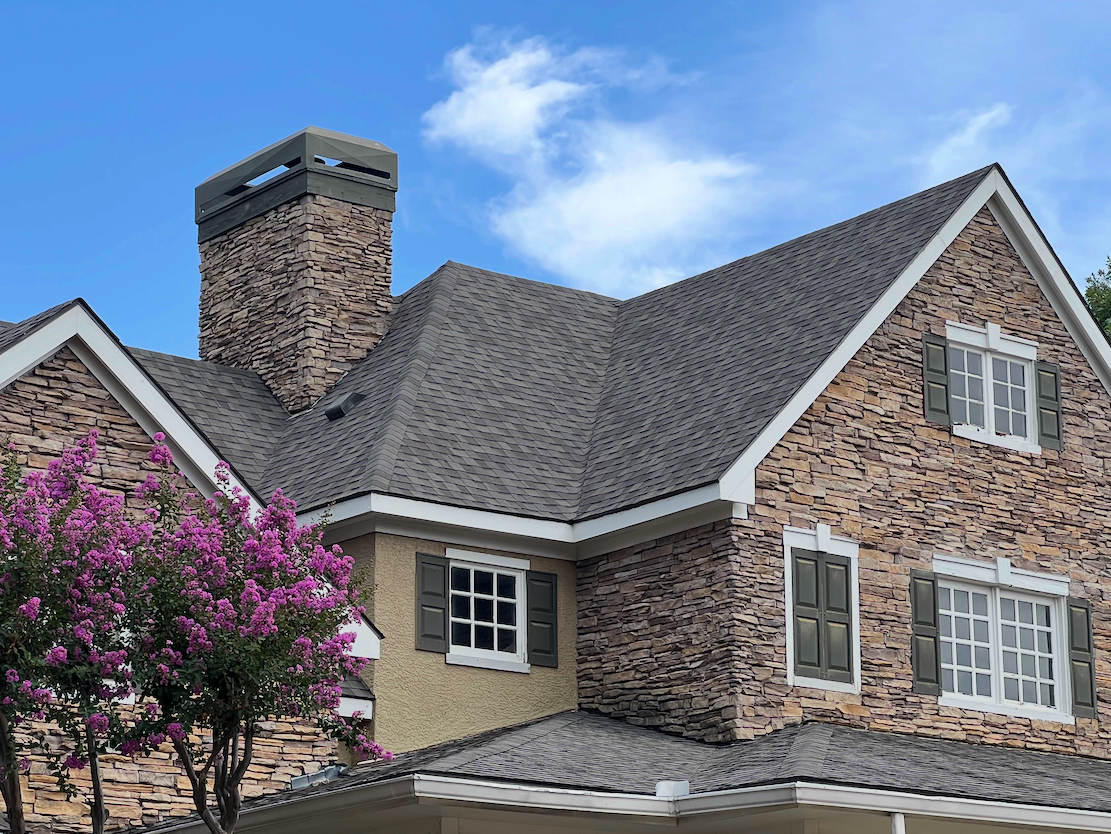
Stone and brick home in Frisco, Texas with a chimney cap visible on the roofline, illustrating the first line of defense against rain, animals, and debris.
The Chimney Cap: Your First Line of Defense
If you have never looked at your chimney cap, you are not alone. Most homeowners couldn't tell you if they have one, let alone whether it's intact. But it matters more than almost anything else on the list.
The chimney cap is the metal cover sitting at the very top of your flue. It keeps rain out. It keeps birds and squirrels from nesting inside. It keeps embers from landing on your roof during a fire. When it rusts, cracks, or disappears entirely — and it does, quietly, over time — every one of those problems walks right in.
Water is the main culprit. One compromised cap lets moisture travel all the way down the flue, into the firebox, into the masonry, and eventually into the structure of your home. What started as a $150 cap replacement becomes a $3,000 liner repair. Chimney inspection & assessment
Spring is the right time to look because winter did the damage. The freeze-thaw cycle in North Texas is mild compared to the north, but it is not nothing — and one season of undetected moisture intrusion is enough to accelerate deterioration you won't see for another two years.
Flashing and the Masonry Crown: Where Water Finds its Way In
Below the cap, where your chimney meets your roofline, sits the flashing. It is a thin layer of metal — usually aluminum or galvanized steel — sealed against both the chimney and the roof surface. When it works, you never think about it. When it fails, water runs down the inside of your walls.
The masonry crown — the concrete collar poured around the top of the chimney structure — is equally vulnerable. It cracks. It shifts. North Texas clay soil moves with every rain cycle, and that movement travels up into the structure. A crown that looks solid from the ground may be fractured enough to let water channel straight into the brick.
Neither of these failures announces itself loudly. You might notice a water stain on the ceiling near the fireplace. You might smell something musty in a room that should not smell musty. By the time you track it to the source, the damage is already done. Chimney repair & masonry services
The Flue and Liner: The Heart of the System
Inside the chimney is the flue — the channel that carries combustion gases out of your home. Lining that flue is a liner, typically clay tile in older homes or stainless steel in newer or relined systems. It is the most critical safety component in the entire assembly.
Creosote — the dark, oily byproduct of burning wood — builds up on the liner walls over time. In small amounts it is manageable. In stage-three buildup, it is fuel for a chimney fire that burns at over 2,000 degrees. A cracked liner does not just allow creosote to accumulate unchecked; it allows combustion gases, including carbon monoxide, to seep into the living areas of your home.
This is not a hypothetical. The National Fire Protection Association cites dirty or unmaintained chimneys as a leading cause of home heating fires in the United States. Paul's crew does not hurry through a cleaning because they understand what they are actually cleaning — not soot, but risk. Chimney cleaning & sweeping
The Firebox and Damper: Where Your HVAC Efficiency Disappears
Here is something most North Texas homeowners do not connect until someone explains it to them: a compromised damper is making your air conditioning bill higher.
The damper is the metal plate that seals the firebox from the flue when the fireplace is not in use. When it is warped, corroded, or simply stuck open — which happens frequently and silently after a winter of use — your home’s conditioned air is flowing straight up the chimney and out of the house. You are cooling the sky.
In the shoulder season between spring and summer, when temperatures in McKinney, Prosper, and Celina swing thirty degrees between morning and afternoon, a failed damper forces your HVAC system to work harder than it should have to. The fireplace that warmed your living room in January is undermining your cooling costs in April.
Paul sees this often enough that he keeps a relationship with a trusted local HVAC company for exactly this reason. When a damper issue is compounding a bigger efficiency problem, he does not leave a homeowner guessing — he makes the introduction to Efficient Home Solutions AC & Heating, his go-to team in Plano for North Texas homeowners who need the full picture.
A thorough inspection catches what you cannot see. The right people around you take care of the rest. Fireplace & damper services
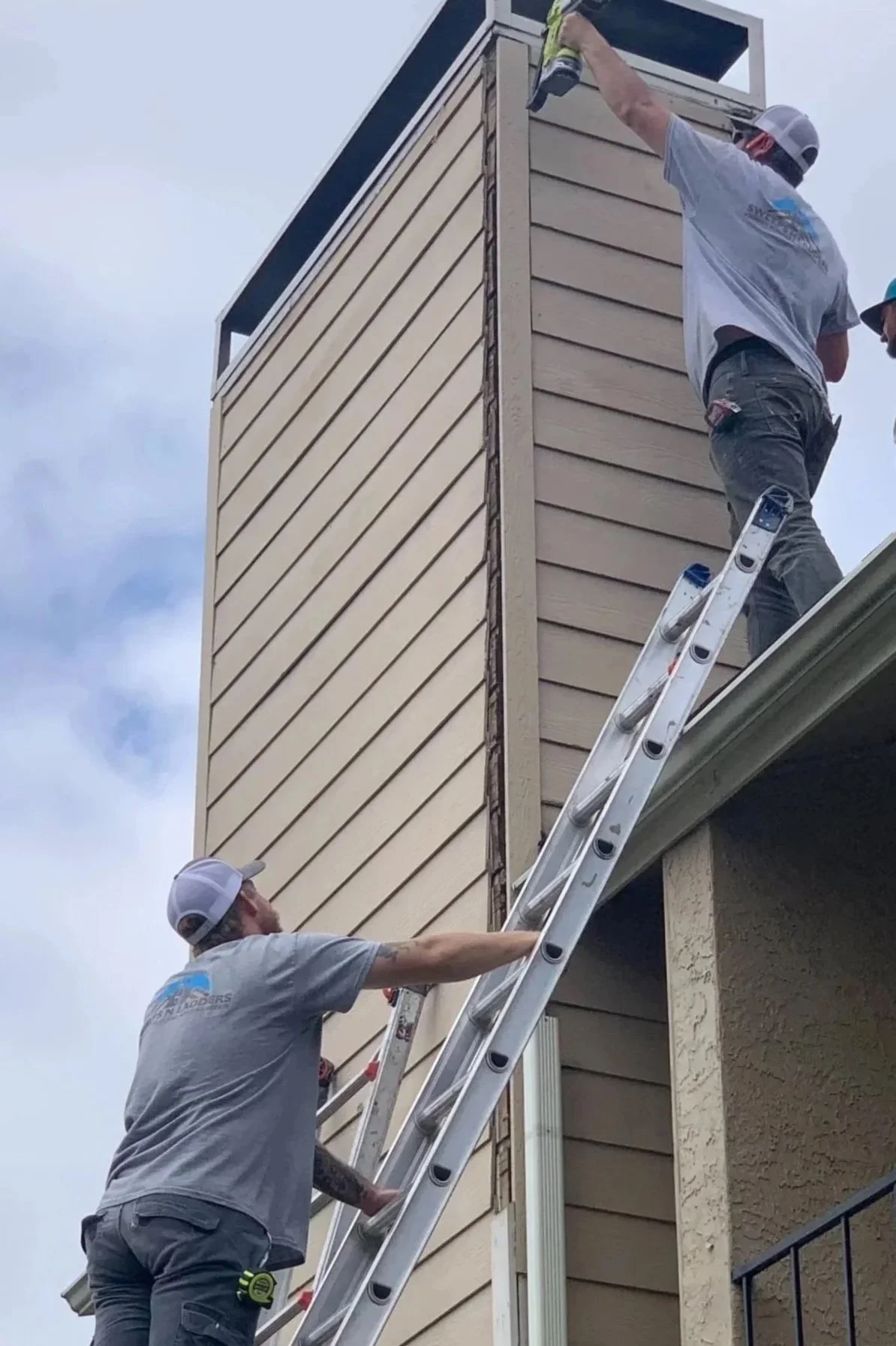
Sweeps N Ladders technician repairing chimney exterior in Allen, Texas
The Exterior and Foundation: How It All Comes Down
Most homeowners never think about the outside of their chimney. They think about the firebox, the damper, maybe the flue. But Paul Herman has pulled apart enough masonry to know that the worst damage in a chimney system is often the kind you can’t see from your living room.
In North Texas, brick takes a beating. The region doesn’t get the brutal winters of the Midwest, but it gets something almost more damaging: temperature whiplash. A January week that drops below freezing, followed by a weekend in the sixties. That cycle — freeze, thaw, freeze again — is exactly what spalling brick is made of. Water works into the microscopic pores of mortar and masonry. It expands when it freezes. When it thaws, the brick is slightly weaker than it was before. Do that a hundred times over ten years and what looked like a solid chimney from the driveway starts to crumble from the inside out.
Tuckpointing — the process of repairing and replacing degraded mortar joints — is one of the most underrated services in chimney maintenance. Paul describes it to homeowners this way: a dentist doesn’t pull a tooth that can be saved with a filling. Tuckpointing is the filling. If the mortar joint fails and the brick itself starts to go, now you’re talking about a partial rebuild. The cost difference is significant. The window to catch it early is not indefinitely open.
What makes exterior masonry problems more serious than they appear is where the water goes next. A chimney that is absorbing moisture at the crown or along the brick face is, by definition, moving that moisture somewhere. In many cases, that somewhere is down — along the exterior wythe of the chimney, into the flashing line, and eventually toward the roofline or the foundation. Paul has walked homeowners through water damage in their attic and traced it back to mortar joints no one had looked at in fifteen years.
The foundation connection is the one that surprises people most. A chimney is not floating in your wall. It sits on a footing, and that footing interacts with the soil and moisture conditions around your home. Chronic moisture intrusion at the chimney base — especially in expansive clay soils common throughout North Texas — can create settlement issues that manifest as cracks in the firebox, a tilting structure, or doors and windows that no longer close cleanly.
It is not a metaphor. It is physics. And in Paul’s experience, the homeowners who understand that a chimney is a system — from cap to footing — are the ones who avoid the expensive surprises.
What to Do Right Now
Spring is the window. The heating season is over. The fires are out. The evidence of winter use is still fresh and readable to someone who knows what to look for — and before summer arrives and you close everything up and forget about it until October, there is a narrow opportunity to catch the small problems before they become the large ones.
The checklist is simple: cap and crown, flashing, liner and creosote, damper, exterior masonry. Top to bottom. One visit. Done right.
That is what Sweeps N Ladders does. It has built a reputation across North Texas doing this one thing thoroughly — the work nobody sees until it is done right, by someone who has been on enough roofs to know that what you cannot see is exactly what you need to check.
WHEN FIREPLACE AND CHINEY SAFETY MATTERS.
730+ five-star Google reviews. Serving McKinney, Prosper, Celina, Frisco & North Texas for over 15 years.
CALL NOW — (469) 777-8432